Three Years of Watching My Mental Sharpness Decline While Attributing It to Age. My Neurologist Had a Different Explanation — and Six Compounds Restored What Forty Years of Professional Life Had Depended On.
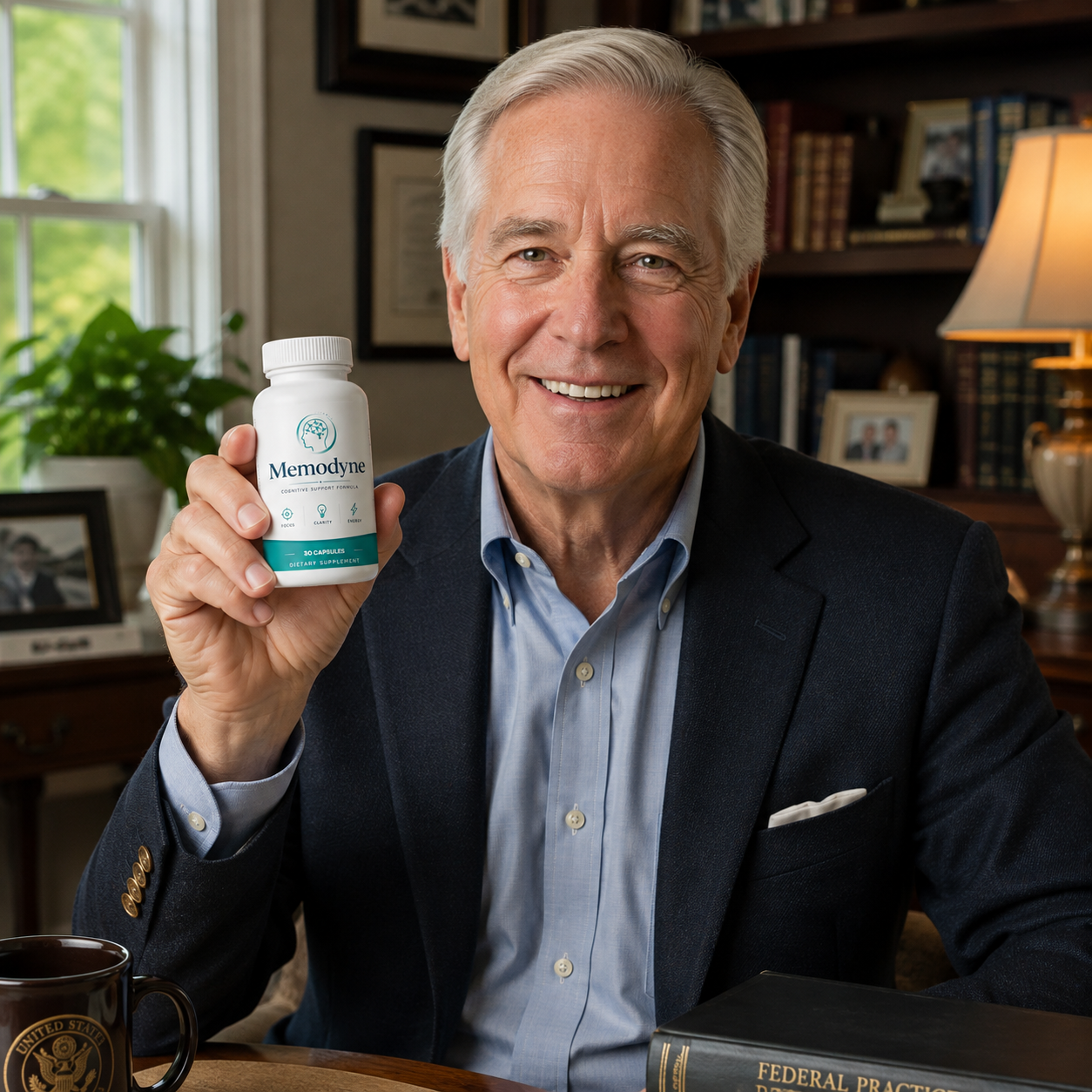
I'm 67 years old. I spent 38 years as a federal judge — a career built entirely on the ability to process complex information rapidly, hold multiple lines of legal reasoning simultaneously, recall precedent with precision, and communicate with the measured, authoritative clarity that the courtroom demands. Cognitive sharpness wasn't a professional advantage in my career. It was the job itself. When it began declining in my early sixties, I noticed it before anyone else did — and I attributed it, as most people do, to age.
Three years of that attribution followed. The names that took a fraction longer to retrieve. The moments of mid-sentence pause that hadn't been there before. The reading sessions that required re-engagement where they once demanded none. The end-of-bench fatigue that arrived earlier than it used to. None of it was dramatic. All of it was real. And all of it I had classified as the expected toll of six decades of intensive cognitive use — until my neurologist offered a different frame at my annual examination.
He explained the mechanism with the precision I had come to expect from him: what I was describing was not primarily a consequence of cognitive aging. It was a consequence of declining cerebral vascular efficiency — a measurable, addressable biological process that most people mistake for inevitable cognitive decline because the symptoms are identical. The brain, he explained, is among the most metabolically demanding organs in the body. Every cognitive function — recall, focus, reasoning, language — depends on the continuous, efficient delivery of oxygen and nutrients through cerebral circulation. When that delivery system becomes less efficient, cognitive performance declines — not because neurons are dying, but because they are being insufficiently supplied.
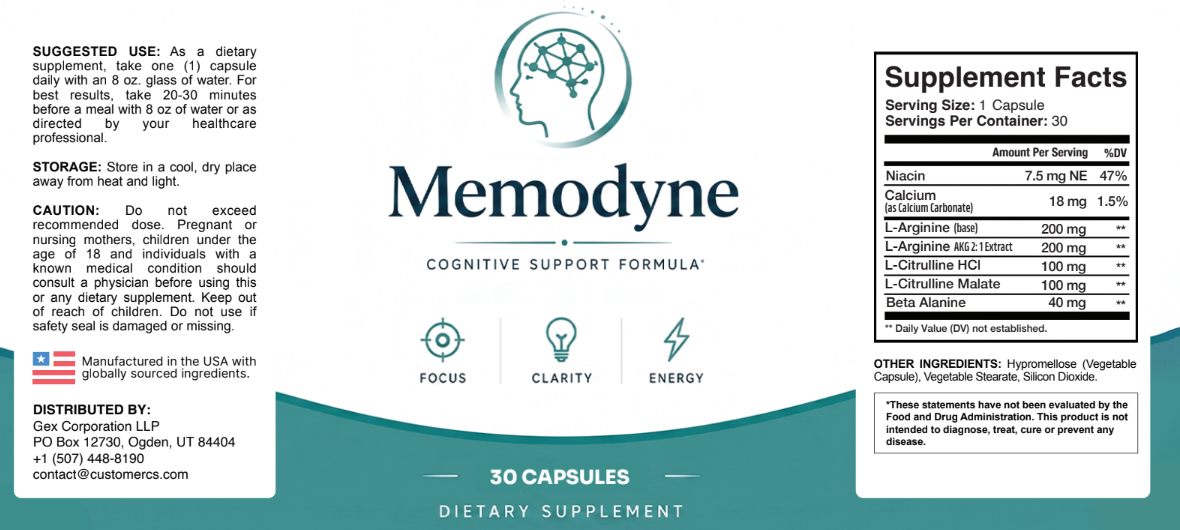
He described L-Arginine and L-Citrulline as the amino acid compounds the body uses to produce nitric oxide — the primary molecular signal for cerebrovascular dilation and efficient blood flow. L-Arginine AKG as an advanced bound form that extends the vasodilating effect across the day. L-Citrulline Malate as the compound that eliminates the metabolic waste that produces cognitive fatigue by end of day. Niacin as the NAD+ precursor that powers energy production inside every neuron. And Beta-Alanine as the compound that raises carnosine — the natural antioxidant that protects neurons from the oxidative stress that cognitive demands accumulate over decades. When I found MemoDyne — combining all six in a single daily capsule — I committed to the 6-bottle protocol. By week four, the pace of retrieval had returned. By month two, my law clerk — who has worked alongside me for eleven years — asked what I had been doing differently because I seemed sharper than I had been in some time. I had not told her I had changed anything.